
Exhibitions
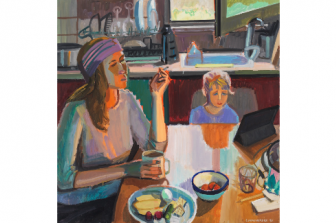
Anna Lukashevsky: Types
New Exhibition
With a deep fondness for eccentric men and women, Anna Lukashevsky wanders in the vicinity of her Hadar studio in Haifa, "hunting" types on the street: people who fit into clear ethnic and social characteristics, but something unique in their personality deviates from the "type" and captures her gaze. When she encounters an interesting figure, she makes a quick drawing on the spot and then invites that person to her studio; there, during several sessions, while conversing with the sitter, she paints and extracts a multi-dimensional individual from the ethnic-social category.
Saturday, 25.06.22
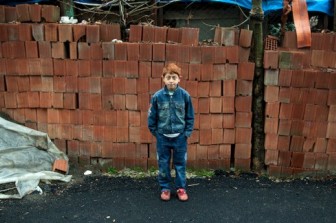
Volkan Kızıltunç & August Sander: The Look
New Exhibition
Centered on photographic portraits, the exhibition brings two artists together, separated by a hundred years—Volkan Kızıltunç and August Sander. The subjects of the portraits look directly at the camera, but rather than momentary, one-sided gazes, these are long observations between the photographers and photographed. The gaze is a means of dialogue between two subjects, who acknowledge the other's subjectivity while looking at each other. Where the photographers and their subjects looked at one another, a bond of gaze is now formed between the viewer and the work of art.
Saturday, 25.06.22
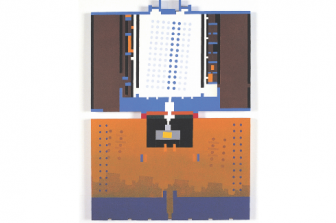
Artist's Room: Reuven Berman Kadim
New Exhibition
The exhibition is centered on The Open Receptacle—a significant gift recently received at Haifa Museum of Art. In this work, one may discern Berman Kadim's transition from two-dimensional to three-dimensional work and his engagement with architecture. The structure of the receptacle is reminiscent of wooden Egyptian sarcophagi, and its proportions are based on the arithmetic ratio used in the design of the Parthenon floor—a Greek temple from the 5th century BCE in Athens, considered the epitome of classical architecture, whose floorplan is painted on the bottom of the receptacle.
Saturday, 25.06.22
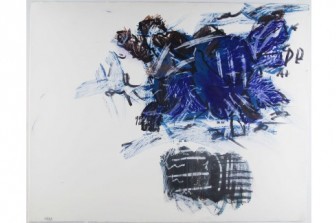
Artist Room: Aviva Uri
New Exhibition
Aviva Uri's ability to touch on raw emotion, and the intense expressive quality typifying her work, have made her a highly influential, mythical figure in the history of art in Israel. The exhibition presents an outstanding selection of Uri's works, all from the collection of Haifa Museum of Art.
Saturday, 25.06.22
The Haifa Way: 70th Anniversary of Haifa Museum of Art
New Exhibition
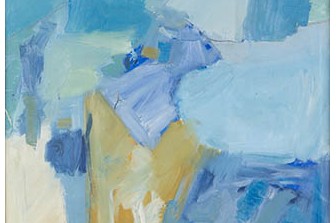
Haifa Museum of Art, one of the first museums established in Israel, is celebrating its 70th anniversary this year. A museum's material heritage is embodied in its collection, in the works it purchased and those donated to it. The works in the collection determine the museum's genetic code, and each new work entrusted for safekeeping joins its predecessors in shaping the museum's identity. This exhibition sets out to decipher the identity of Haifa Museum of Art by delving into its collections, asking where it is headed in the future.
Saturday, 01.01.22
Treasures of the Tikotin Museum of Japanese Art
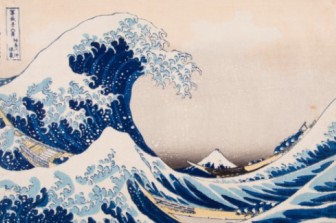
On the celebrated occasion of the 60th anniversary of the Tikotin Museum of Japanese Art, a wide variety of artworks from the Museum’s collection will be displayed. It is one of the most important and fascinating collections outside Japan. The collection comprises mostly of Japanese artworks from the Felix Tikotin Collection, to which donations of private collections were added, among them, the collections of Lewis B. Gutman and Daniel and Hilda Lebow of New York, the collection of Abraham Horodisch of Amsterdam, the collections of Shulamith and David Rubinfien and Sandra and Kenneth Bleifer of California, the collection of Michael Rukin of Boston and many others.
Tuesday, 28.09.21
Perestroika in Haifa 30 Years of Aliyah from the Former Soviet Union
Current Exhibition
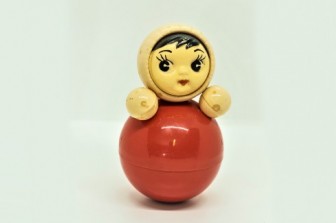
This exhibition marks three decades since that major wave of immigration from the former Soviet Union. The influx made a decisive impact on Israel, not only in terms of its sheer numbers, but in the distinct culture and outlook that the new immigrants brought with them. Although they settled throughout the country, the city of Haifa stood out because of the size of the community that made its home there. Its presence began to be felt throughout the city, on Russian-language signs, in shops, a variety of workplaces, and more. The new immigrants were able to preserve their old culture and traditions almost entirely, while at the same time acclimating to their new country. They rebuilt their lives in Israel – and within it, Haifa – achieving in essence their own private perestroika.
Saturday, 22.10.22
"What Will The Neighbours Say?"
Queer Life in Haifa 2007-1932
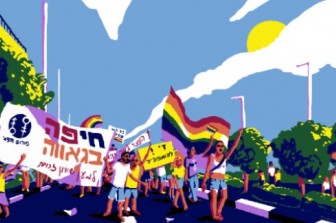
The history of Haifa's gay community is long and fascinating, yet despite its importance on both the local and national level, it has largely remained concealed. In the study of queer history in Israel, as a field addressing the plight of sexual and gender minorities, it is the history of Tel Aviv that has most often been documented; Tel Aviv also figures prominently in the collective memory of the local gay community. The chronology of the gay struggle in Israel, including films on this subject, tends to tell a Tel-Avivian tale, with occasional flickers of Jerusalem.
Saturday, 02.04.22
Exhibition curators: Dotan Brom, Yoav Zaritsky, and Adi Sadaka (the Haifa Queer History Project) and Inbar Dror Lax
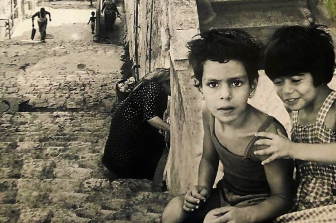
"A Black Flag in a Red City"
Wadi Salib: 1948-2019
The exhibition A Black Flag in a Red City illuminates a chapter in the history of Haifa's Wadi Salib neighborhood, the social implications of which are absent from most of the urban and national "spaces of memory." The exhibition focuses on the voices of the residents of Wadi Salib in the second half of the twentieth century, reflecting a personal and collective memory of urban history written "from below." Using exclusively visual means, the exhibition presents experiences of marginality, injustice, and exclusion, alongside the development of a diverse and lively social fabric. This reality fostered processes of social organization and resistance, climaxing in the protests of July 1959.
Sunday, 11.10.20
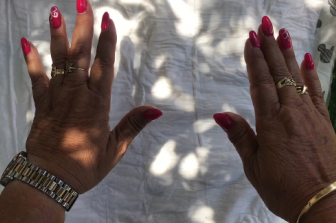
Space for Community Art: Maja Gratzfeld: Manual Labor
Maja Gratzfeld came from Germany to Israel as part of a student exchange program with the Bezalel Academy of Arts and Design. In Jerusalem she met her partner, and together they decided to start a family in Haifa. During the COVID-19 period, Gratzfeld found herself with a newborn baby, in a new country, struggling to get by in a foreign language. With movement restricted to a 500-meter radius of her home under the lockdown regulations, in a nearby park she met a few elderly women, nannies aged fifty to seventy who make their livings taking care of other people's children, and they became her community. It was no coincidence that Gratzfeld met them in a public park in Haifa's Carmel area, whose population is typically of a high socio-economic ranking that can afford such service.
Curator: Yifat Ashkenazi
Saturday, 28.10.23
Please contact us and we will contact you as soon as possible